
Cold chain: why traceability changes everything
Industry estimates suggest a significant share of pharmaceuticals and food suffer temperature excursions in transit. Continuous traceability turns the cold chain into evidence.
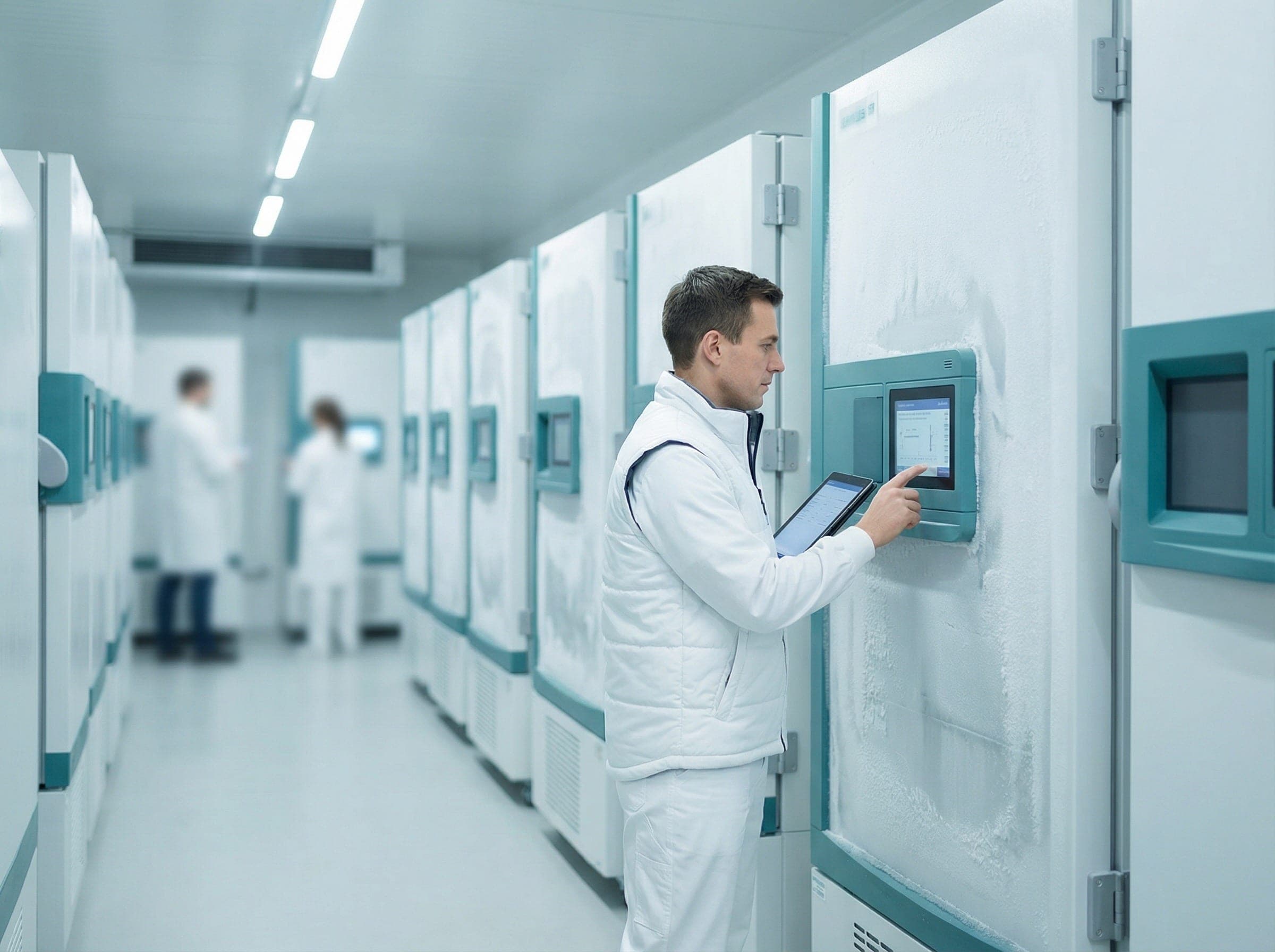
The cold chain breaks without you knowing. A product leaves the warehouse at 4 °C and reaches the customer at 12 °C, but there's no record of what happened in between. That invisible window is where, by industry estimates, billions of dollars a year are lost in pharmaceuticals and perishables.
The problem isn't only the direct loss. It's that, without evidence, you can't prove the temperature held for the entire trip. When a customer rejects a batch, you have no way to verify the actual transport conditions. And when a regulator asks for documentation, you show up with manual logs nobody signed in real time.
From monitoring to proof
The gap between "monitoring" and "having traceability" is huge. Monitoring is seeing the temperature right now. Traceability is being able to reconstruct, minute by minute, what temperature every pallet experienced from the moment it entered the warehouse until the delivery was signed, and to export it as an immutable certificate.
The Cold Chain module integrates temperature sensors with the iWMS, the iTMS and the Control Tower to deliver end-to-end visibility:
- Sensors from any vendor. We connect dedicated devices, OBD readings or any API. No lock-in to a single manufacturer.
- Logging every minute. Temperature is captured continuously during storage and transport, not at sporadic checkpoints.
- Instant alerts. If the temperature leaves the defined range, the Control Tower is notified immediately, not in tomorrow's report.
- Automatic certificates. Every delivery generates an exportable temperature report, ready for the customer or the auditor.
Traceability as an asset, not a cost
When traceability is continuous, it stops being administrative overhead and becomes an operational asset. Three concrete effects:
Disputes that resolve themselves. If a customer claims the product arrived out of range, you open the complete, immutable history of the trip. The conversation shifts from "your word against mine" to "here's the data."
Regulatory risk under control. Documentation is no longer assembled in a rush before an audit. It's generated automatically, time-stamped and tied to each batch.
Excursions you prevent. An early alert about a refrigeration unit starting to fail lets you intervene before losing the load, not after.
Where it fits in your operation
The cold chain cuts across several industries, and the solution adapts to each. In food and beverage, traceability protects thin margins and reduces rejections. In 3PL operations, it becomes a commercial differentiator: you can offer customers temperature evidence as part of the service.
The starting point isn't buying more sensors, but connecting the ones you already have to a platform that logs, alerts and certifies automatically. That's the difference between knowing something went wrong and being able to prove everything went right.
Want to see how it fits your current operation? Let's talk and we'll set up a pilot on your critical routes.