
Pillar: Profitability
iRouter: Smart routing with AI that learns
Builds routes in minutes, not hours, respecting each customer's delivery windows, capacity and priority. And because it shares the calculation with Smart Palletizing, it knows what fits in each truck before closing the route.
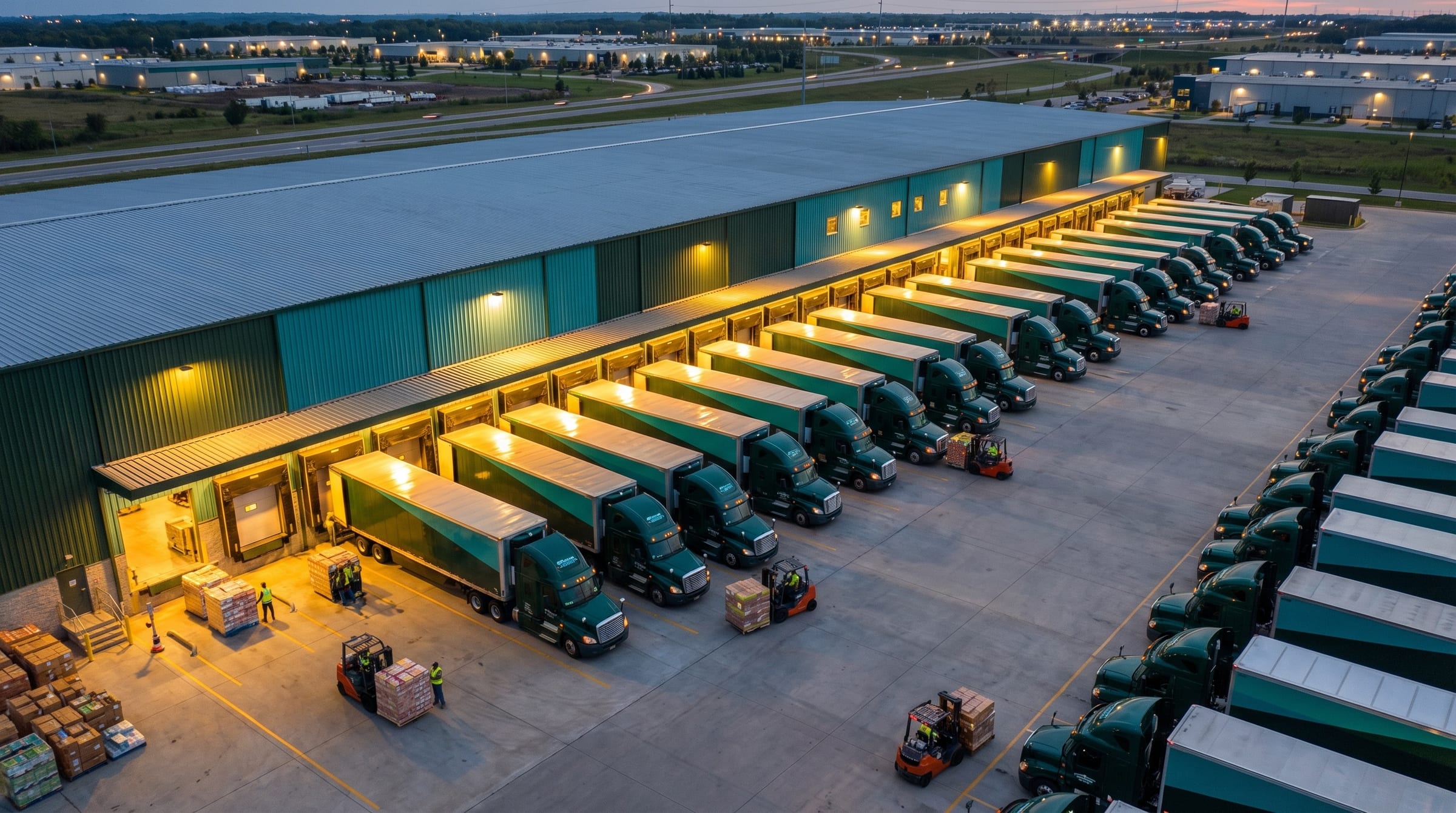
Your team loses the morning building routes by hand
- Hours of planning every day, against the clock, after the order cutoff.
- Routes that ignore the delivery window: the truck arrives and nobody receives it.
- Routing by kilometer, not by what each customer is worth.
- The route closes without knowing if the load fits: the truck leaves half-empty or makes a second run.
- Wide ETAs that don't hold, and the customer calls anyway.
Routing that thinks about the truck, the customer and the clock
Routing by business value
Optimizes for what matters to you: customer value, time window, priority and capacity, not just the shortest kilometer.
Knows what fits before routing
Every time you move an order from one truck to another, it recalculates the palletizing instantly: this customer fits, this one doesn't. No tier-1 competitor calculates routing and palletizing together.
AI that learns from every delivery
The ETA improves with the operation: the range drops from 30 to 10 minutes in about 3 months, because the AI learns by driver, by customer and by parcel count.
Minutes, not hours
In a demo, the engine routed 5,000 orders (50 trips) in about 10 minutes. Your team stops building routes against the clock and gets back to deciding.
From order cut-off to routes ready in minutes
At order cut-off, the router builds trips by affinity, distance, delivery window and business rules, and sets the delivery sequence for every truck.
Today's routing
Order cut-off 6:00 pm
- Orders at cut-off
- 5,000
- Trips built
- 50
- Calculation time
- ~10 min
Capability shown in a demo, not a customer result.
Route R-12 · delivery sequence
- 1Regional chainLargest load, early window6:00 to 8:00
- 2SupermarketAlong the way7:30 to 9:30
- 3Corner storeAlong the way8:00 to 12:00
- 4Regional chain, store 2Within window9:00 to 11:00
- 5WholesalerWithin window10:00 to 14:00
- 6Corner storeEnd of route11:00 to 15:00
- 01Cut-off and calculationIn a demo, 5,000 orders become 50 trips in about 10 minutes. Building them by hand took around 3 hours after cut-off.
- 02Sequence with business logicFirst the customer with the largest load and an early window; then the ones along the way, always within their window.
- 03Adjust on the mapSelect customers on the map and move them to another trip. Route and load are recalculated with the change.
0 minETA range after about 3 months: the AI learns
- 6 weeks To get basic routing into production (4 to 6)
From finding to go-live
- 85% → 99%A leading bottlerTruck load from 85% to 99% and 8% lower transport cost. The returnable-glass rule added 10% capacity.See the case
- ImplementationA pilot before the contractA 13-week plan with deliverables per phase and go-live criteria.See the methodology
- ROICalculate payback with your dataTrucks, cost per trip and manual routing hours. You adjust the assumptions.Open the calculator
How many hours a day go into building routes?
Book a demo and we'll route a real day of your operation.